Running Toilet Repair in Winston-Salem, NC
Learn about running toilet repair in Winston-Salem, NC, including common causes, warning signs, repair options, water waste, prevention tips, costs, and when to call a professional plumber.

Running Toilet Repair in Winston-Salem, NC
A toilet that continues running after it has been flushed may seem like a minor plumbing inconvenience, but it should not be ignored. A constantly running toilet can waste water, create annoying sounds, and indicate that one or more internal components are not working correctly.
Professional running toilet repair in Winston-Salem, NC can help identify the cause and restore the toilet to normal operation. In many cases, the problem involves a worn flapper, faulty fill valve, incorrect water level, damaged flush valve, or another component inside the toilet tank.
What Causes a Toilet to Keep Running?
A toilet operates through several connected components inside the tank. When one component fails or becomes improperly adjusted, water may continue flowing into the bowl.
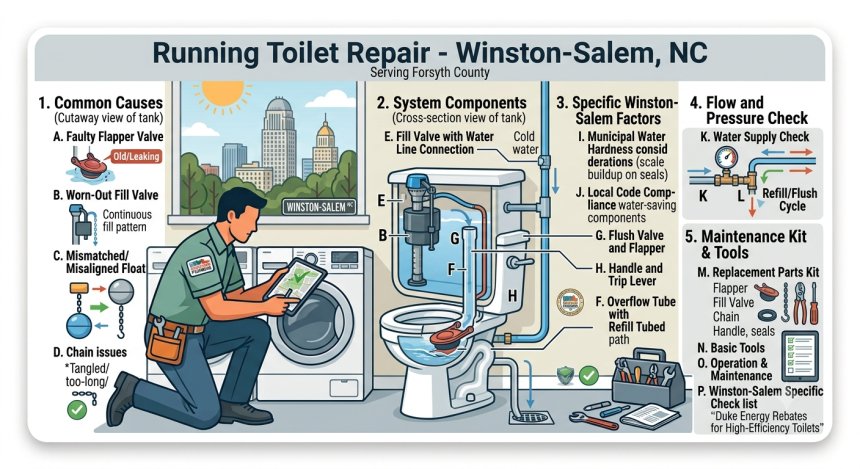
Common causes include:
- Worn-out flapper
- Faulty fill valve
- Incorrect water level
- Damaged flush valve
- Loose or damaged chain
- Mineral buildup
- Faulty float
- Poorly adjusted components
- Cracked internal parts
- Toilet tank deterioration
Identifying the specific cause is important because replacing the wrong component may not solve the problem.
Signs of a Running Toilet
The most obvious sign is hearing water continuously moving through the toilet.
Other signs include:
- Hissing sounds
- Periodic refilling
- Water movement inside the bowl
- Toilet tank frequently refilling
- Weak or incomplete flushing
- Water level that changes unexpectedly
- Higher water usage
- Toilet running after every flush
Some running toilets are quiet enough that homeowners may not notice them immediately.
Worn Toilet Flapper
The flapper is a rubber component that helps control water leaving the tank and entering the bowl.
Over time, the flapper can become:
- Brittle
- Warped
- Cracked
- Worn
- Covered with mineral deposits
If the flapper does not create a proper seal, water can continuously leak from the tank into the bowl.
Replacing a worn flapper can sometimes resolve a running toilet when the flapper is the source of the problem.
Faulty Fill Valve
The fill valve controls the flow of water entering the toilet tank after flushing.
A defective fill valve may cause the toilet to:
- Run continuously
- Refill slowly
- Make a hissing sound
- Refill repeatedly
- Fail to maintain the correct water level
If the fill valve is worn or malfunctioning, replacement may be necessary.
Incorrect Water Level
The water inside the tank needs to remain at an appropriate level.
If the water level is too high, water may enter the overflow tube and continuously flow into the bowl.
If the level is too low, the toilet may not flush properly.
Proper adjustment depends on the toilet design and its internal components.
Toilet Chain Problems
A chain connects the flush handle to the flushing mechanism.
If the chain is too tight, too loose, tangled, or damaged, it may prevent the flapper from sealing properly.
A simple adjustment may resolve some chain-related problems, but damaged components may require replacement.
Mineral Buildup
Mineral deposits can accumulate on toilet components over time.
Buildup may affect:
- Flapper seals
- Fill valves
- Flush valves
- Water passages
- Other internal components
If mineral buildup repeatedly affects toilet performance, the underlying component may need cleaning or replacement.
Why a Running Toilet Should Not Be Ignored
A continuously running toilet can waste water over time.
It can also indicate that a component is gradually deteriorating.
Ignoring the issue may lead to:
- Increased water usage
- Higher utility costs
- Constant noise
- More frequent toilet problems
- Further component damage
Repairing the issue early can help restore normal toilet operation.
Professional Running Toilet Repair Process
A plumber may begin by testing the toilet and inspecting the tank components.
The process can include:
- Checking the flush handle
- Inspecting the flapper
- Checking the chain
- Evaluating the fill valve
- Checking the float or water-level mechanism
- Inspecting the flush valve
- Looking for mineral buildup
- Testing the toilet
- Replacing damaged components
- Confirming proper operation
The exact repair depends on the toilet's design and the cause of the problem.
Can a Running Toilet Increase Water Bills?
Yes. A toilet that continuously allows water to flow can increase household water consumption.
The amount depends on the severity of the leak and how long the problem continues.
Addressing a running toilet promptly can help prevent unnecessary water use.
Running Toilet After Every Flush
If the toilet continues running after every flush, the problem may involve the flapper, chain, fill valve, water level, or flush mechanism.
A toilet that only runs occasionally may have a small leak or intermittent valve problem.
Professional inspection can help determine the source.
How to Prevent Running Toilet Problems
Homeowners can reduce the likelihood of toilet problems by:
- Avoiding excessive force on the flush handle
- Monitoring water levels
- Addressing weak flushing
- Checking for unusual sounds
- Cleaning the toilet appropriately
- Replacing worn components when necessary
- Avoiding unsuitable materials in the toilet
Regular attention can help identify problems before they become more serious.
How Much Does Running Toilet Repair Cost?
The cost depends on the cause and the components involved.
Factors may include:
- Type of toilet
- Failed component
- Parts required
- Labor
- Accessibility
- Mineral buildup
- Additional plumbing problems
Replacing a simple internal component is different from repairing a damaged toilet or plumbing connection.
When to Call a Plumber
Professional toilet repair may be appropriate when:
- The toilet runs continuously
- The problem keeps returning
- The toilet leaks around the base
- The flush is weak
- Multiple toilet components appear damaged
- Water usage has increased
- You cannot identify the cause
- A basic adjustment does not resolve the problem
A plumber can inspect the toilet and determine whether the problem is isolated to the fixture or connected to the home's plumbing system.
Frequently Asked Questions
Why does my toilet keep running?
Common causes include a worn flapper, faulty fill valve, incorrect water level, damaged chain, or flush valve problem.
Is a running toilet serious?
It may not always indicate a major plumbing emergency, but it can waste water and should be repaired.
Can I fix a running toilet myself?
Some simple adjustments or component replacements may be possible for homeowners who are comfortable with basic plumbing work. Persistent problems may require professional service.
Why does my toilet run after flushing?
The flapper may not be sealing correctly, or the fill valve, chain, float, or water level may need adjustment.
How much water can a running toilet waste?
Water waste varies significantly depending on the severity of the leak and the toilet design.
When should I replace the toilet instead of repairing it?
Replacement may be considered when the toilet is cracked, severely damaged, repeatedly malfunctioning, or no longer practical to repair.
Final Thoughts
A running toilet may appear to be a small problem, but continuous water flow can waste water and indicate failing internal components. Common causes include worn flappers, faulty fill valves, incorrect water levels, and damaged flush mechanisms.
Professional running toilet repair in Winston-Salem, NC can help identify the source of the problem and restore proper toilet operation. Addressing the issue early can help reduce water waste and prevent more complicated plumbing problems.
Share
What's Your Reaction?
 Like
0
 Dislike
0
 Love
0
 Funny
0
 Angry
0
 Sad
0
 Wow
0