Older Home Plumbing Repair in Winston-Salem, NC
Learn about older home plumbing repair in Winston-Salem, NC, including common plumbing problems, aging pipes, leaks, low water pressure, drain issues, inspections, repair options, and maintenance.

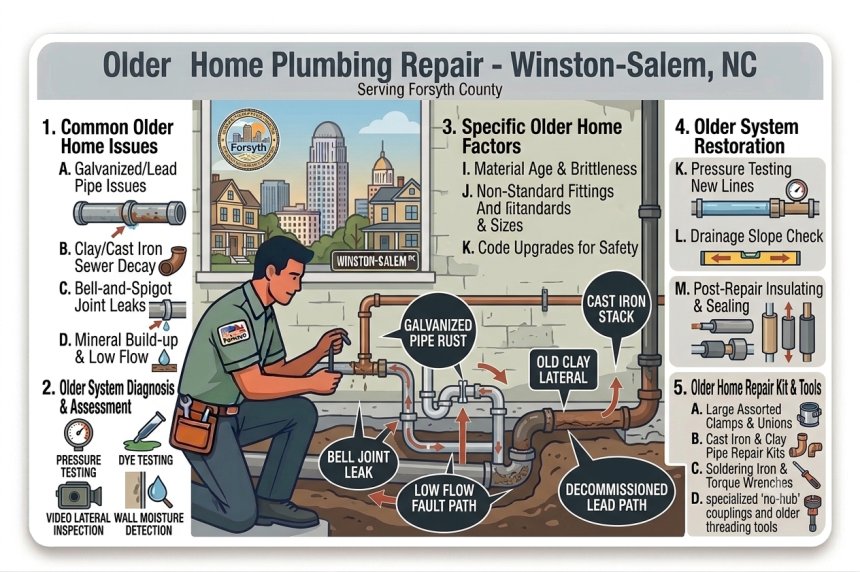
Older Home Plumbing Repair in Winston-Salem, NC
Older homes can have unique plumbing systems that differ from those found in newer construction. Pipes, fixtures, valves, drains, water supply lines, and other components can experience years of use and may eventually require repair or replacement.
When plumbing problems occur in an older property, fixing the visible symptom may not always address the underlying condition of the system.
Professional older home plumbing repair in Winston-Salem, NC can help homeowners evaluate aging plumbing, identify leaks, improve drainage, address water pressure problems, and determine which components may need repair or replacement.
Older plumbing does not automatically mean that an entire system needs replacement. A professional inspection can help determine the actual condition of the plumbing.
Common Plumbing Problems in Older Homes
Aging plumbing systems may experience a range of issues.
Common problems include:
-
Leaking pipes
-
Corroded plumbing
-
Low water pressure
-
Slow drains
-
Frequent clogs
-
Leaking faucets
-
Running toilets
-
Outdated fixtures
-
Damaged sewer lines
-
Water heater problems
-
Valve failures
-
Drainpipe deterioration
The type and severity of the problem depend on the home's plumbing materials, age, previous repairs, and maintenance history.
Aging Water Supply Pipes
Water supply pipes can deteriorate over time.
Possible signs of aging supply plumbing include:
-
Leaks
-
Corrosion
-
Reduced water flow
-
Discolored water
-
Weak connections
-
Frequent repairs
If multiple areas of the home experience plumbing problems, the condition of the broader supply system may need evaluation.
Corroded Plumbing Pipes
Corrosion can affect certain types of older plumbing materials.
As pipes deteriorate, internal buildup can restrict water flow or eventually lead to leaks.
Visible corrosion around connections can also indicate that the plumbing should be inspected.
If corrosion is widespread, replacing isolated sections may not always be the only consideration. A plumber can assess the overall condition of the system.
Low Water Pressure in Older Homes
Low water pressure is a common complaint in some older plumbing systems.
Possible causes include:
-
Corroded pipes
-
Mineral buildup
-
Partially closed valves
-
Leaking pipes
-
Restricted supply lines
-
Faulty pressure-regulating equipment
-
Fixture problems
If only one fixture has low pressure, the issue may be localized. If the entire home has reduced flow, the plumbing supply system may need more detailed inspection.
Slow Drains in Older Homes
Older drain systems can accumulate buildup over time.
Common causes of slow drainage include:
-
Organic buildup
-
Grease
-
Hair
-
Mineral deposits
-
Pipe deterioration
-
Drain obstructions
Repeatedly using chemical drain cleaners may not address an underlying pipe problem.
Professional drain inspection and cleaning can help determine whether the issue is a simple blockage or a more significant plumbing concern.
Frequent Plumbing Clogs
Recurring clogs may indicate more than improper fixture use.
Possible causes include:
-
Accumulated debris
-
Damaged drainpipes
-
Poor pipe slope
-
Tree root intrusion in applicable sewer systems
-
Pipe deterioration
-
Structural problems
If a drain repeatedly becomes clogged shortly after cleaning, professional evaluation may be appropriate.
Leaking Faucets in Older Homes
Older faucets may develop leaks because of worn internal components, deteriorated seals, corrosion, or aging connections.
A leaking faucet can waste water and may eventually cause damage to surrounding surfaces.
Depending on the condition of the fixture, repair or complete faucet replacement may be appropriate.
Running Toilets in Older Homes
Older toilet components can wear out over time.
Problems may involve:
-
Flapper
-
Fill valve
-
Flush valve
-
Handle
-
Supply connection
-
Tank components
A continuously running toilet can waste water and should be inspected if basic adjustments do not solve the problem.
Older Home Sewer Line Problems
The sewer line is an important part of a home's plumbing system.
Older sewer lines can experience:
-
Cracks
-
Blockages
-
Root intrusion
-
Joint deterioration
-
Corrosion
-
Pipe collapse
-
Poor connections
Warning signs may include:
-
Repeated backups
-
Slow drains throughout the home
-
Sewer odors
-
Gurgling drains
-
Wastewater returning through fixtures
A professional sewer inspection may help determine the condition of the line.
Water Heater Problems in Older Homes
An aging water heater can develop problems such as:
-
Leaks
-
Sediment buildup
-
Reduced hot water
-
Faulty heating components
-
Corrosion
-
Temperature problems
-
Pressure-related issues
If the water heater is old and requires frequent repairs, homeowners may want to compare continued repair with replacement.
Plumbing Leaks in Older Homes
Leaks can occur at:
-
Pipe joints
-
Valves
-
Supply lines
-
Faucets
-
Toilets
-
Water heaters
-
Drain connections
Some leaks are easy to see, while others may remain hidden behind walls, beneath floors, or in crawl spaces.
Unexplained moisture, water stains, musty odors, or increased water usage can indicate a hidden leak.
Plumbing Inspection for an Older Home
A professional plumbing inspection can provide useful information about the condition of an aging system.
The inspection may include:
-
Water supply pipes
-
Drain lines
-
Sewer connections
-
Shutoff valves
-
Fixtures
-
Water heater
-
Visible plumbing connections
-
Signs of corrosion
-
Signs of leaks
-
Water pressure
-
Drainage performance
The goal is to identify current problems and potential areas of concern.
Plumbing Repair Versus Replacement
Not every old pipe or fixture needs to be replaced.
Repair may be appropriate when:
-
The damage is localized
-
The surrounding plumbing is in good condition
-
The component is serviceable
-
The repair provides a suitable solution
Replacement may be considered when:
-
Pipes are severely deteriorated
-
Leaks are frequent
-
Corrosion is widespread
-
Repairs are becoming repetitive
-
The plumbing material is failing
-
The existing system no longer meets household needs
A professional assessment can help homeowners understand the available options.
Replacing Sections of Old Plumbing
Partial replacement can sometimes address problem areas without requiring an entire plumbing renovation.
For example, a plumber may replace a severely damaged section while leaving properly functioning sections intact.
The appropriate approach depends on the condition, material, accessibility, and configuration of the plumbing system.
Whole-House Plumbing Replacement
In some older properties, widespread deterioration may make larger-scale replacement worth considering.
Potential reasons include:
-
Multiple recurring leaks
-
Extensive corrosion
-
Poor water pressure
-
Frequent repairs
-
Severely deteriorated drain lines
-
Outdated plumbing configuration
Whole-house replacement is a significant project and should be based on a professional evaluation rather than the home's age alone.
Plumbing During Home Remodeling
Home renovations provide an opportunity to inspect accessible plumbing.
If walls, floors, bathrooms, or kitchens are already being opened, homeowners may choose to have exposed plumbing evaluated.
Addressing deteriorated plumbing during a renovation can sometimes reduce the need to reopen finished areas later.
Older Home Plumbing and Water Quality
Changes in water appearance or taste should not automatically be assumed to result from old plumbing.
Possible causes can involve the plumbing system, water heater, fixtures, or water supply.
If homeowners notice persistent discoloration, unusual odors, or other changes, the plumbing should be evaluated and appropriate water-quality testing may be considered.
How Much Does Older Home Plumbing Repair Cost?
Costs vary considerably depending on the type and scope of work.
Factors may include:
-
Plumbing material
-
Age and condition of the system
-
Location of the problem
-
Accessibility
-
Required replacement parts
-
Labor
-
Wall or floor access
-
Pipe replacement
-
Drain or sewer work
-
Fixture replacement
-
Emergency service
A simple faucet repair is very different from replacing multiple sections of aging plumbing.
Preventive Plumbing Maintenance for Older Homes
Regular maintenance can help homeowners identify developing problems.
Useful steps include:
-
Inspecting visible pipes
-
Checking for leaks
-
Monitoring water pressure
-
Addressing slow drains
-
Watching for changes in water usage
-
Maintaining the water heater
-
Inspecting shutoff valves
-
Replacing worn fixtures
-
Scheduling plumbing inspections when appropriate
Maintenance cannot eliminate every plumbing failure, but it can help identify problems earlier.
Warning Signs That Should Not Be Ignored
Older homeowners should pay attention to:
-
Repeated leaks
-
Persistent low water pressure
-
Frequent drain clogs
-
Sewer odors
-
Water stains
-
Damp areas
-
Unexplained increases in water bills
-
Noisy pipes
-
Discolored water
-
Aging water heater problems
These signs can have different causes, so professional diagnosis is important before deciding on a repair.
Plumbing Repairs During Cold Weather
Cold temperatures can put additional stress on exposed plumbing.
Older homes may have vulnerable pipes in areas such as:
-
Crawl spaces
-
Basements
-
Garages
-
Exterior walls
-
Unheated areas
Proper insulation and maintenance can help reduce the risk of temperature-related pipe problems.
Why Professional Plumbing Service Matters for Older Homes
Older plumbing systems may contain multiple generations of repairs and different pipe materials.
A professional plumber can evaluate how these components interact and identify whether a repair is likely to address the underlying issue.
This is particularly useful when the same plumbing problem keeps returning.
When to Call a Plumber
Professional older-home plumbing service may be appropriate when:
-
Pipes are leaking
-
Water pressure is declining
-
Drains repeatedly clog
-
Sewer backups occur
-
Faucets or toilets continually leak
-
Water heaters have recurring problems
-
Pipes show significant corrosion
-
Water usage increases unexpectedly
-
Plumbing repairs are becoming frequent
-
You are planning a major renovation
Early inspection can help homeowners understand the condition of the plumbing before a major failure occurs.
Frequently Asked Questions
Do older homes always need new plumbing?
No. The age of a home alone does not determine whether its plumbing needs replacement. The condition, materials, performance, and repair history of the system should be evaluated.
What are common plumbing problems in old houses?
Common issues include leaks, corrosion, low water pressure, slow drains, recurring clogs, sewer line problems, aging fixtures, and water heater issues.
Can old pipes cause low water pressure?
Yes. Internal corrosion and mineral buildup can restrict water flow in some aging plumbing systems.
Should I replace all the plumbing at once?
Not necessarily. Some homes may benefit from targeted repairs or partial replacement, while others may have widespread deterioration that makes larger-scale replacement worth considering.
How can I find hidden plumbing leaks?
Signs can include unexplained water usage, water stains, damp areas, musty odors, and unexpected pressure changes. Professional leak detection may be necessary when the source is hidden.
How often should an older home have a plumbing inspection?
The appropriate schedule depends on the home's age, plumbing materials, condition, previous problems, and maintenance history. A plumber can recommend an inspection schedule based on the property's needs.
Final Thoughts
Older homes can have plumbing systems that require more attention because pipes, valves, fixtures, drains, and water heaters experience years of use. However, an older plumbing system does not automatically mean that everything needs to be replaced.
Professional older home plumbing repair in Winston-Salem, NC can help homeowners identify leaks, drainage problems, corrosion, water pressure issues, sewer concerns, and aging fixtures. A detailed plumbing evaluation can help determine whether a localized repair, partial replacement, or larger plumbing project is appropriate.
Regular maintenance and prompt attention to warning signs can help homeowners protect their plumbing system and reduce the risk of unexpected failures.
Share
What's Your Reaction?
 Like
0
 Dislike
0
 Love
0
 Funny
0
 Angry
0
 Sad
0
 Wow
0