Introduction
There is nothing quite like stepping into a morning shower expecting a jolt of hot water, only to be met with a freezing cascade that instantly wakes you up in the worst way possible. Dealing with a failing unit is a major disruption, and when you are searching for dependable water heater repair in Winston-Salem, you need answers fast. Homeowners across the Piedmont Triad—from historic homes near downtown to newer constructions in Clemmons and Lewisville—rely heavily on a steady supply of hot water for laundry, sanitation, and daily comfort. When your system starts rumbling, leaking, or delivering lukewarm water, ignoring it only leads to a messy and expensive midnight failure. Because our local water supply carries distinct mineral content that accelerates wear on heating elements and tank walls, understanding how your system operates and when to call a licensed professional can save you hundreds of dollars in emergency damage.
What Is Water Heater Repair? Decoding the Mechanism
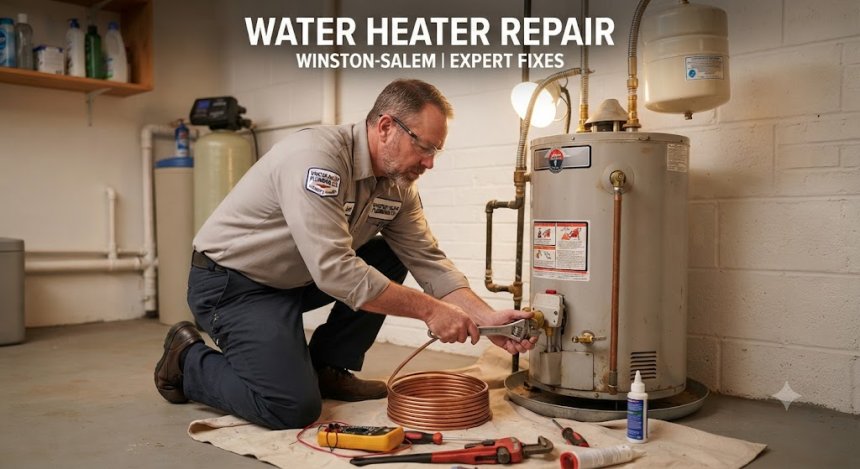
At its core, water heater repair involves diagnosing and restoring the components responsible for heating and storing your home’s domestic water supply. Whether you have a traditional tank system or a modern tankless setup, the fundamental mechanism relies on heat transfer. In a standard tank model, cold water enters through a dip tube, fills the heavy steel reservoir, and is warmed by either electric heating elements or a gas burner controlled by a thermostat and a gas valve. As the water heats up, it expands and rises, exiting through the hot water outlet pipe at the top of the unit. When something breaks down—such as a tripped reset button, a failing thermocouple, or a corroded anode rod—the system struggles or fails entirely to heat water efficiently. Imagine a traditional 50-gallon tank in a historic West End basement working overtime against hard mineral buildup until the lower element burns out; that physical breakdown is precisely what professional repair targets.
Critical Warning Signs: When Your Home is Sounding the Alarm
Your water heater rarely fails without giving you a few hints beforehand. Recognizing these sensory indicators can mean the difference between a simple part replacement and a catastrophic basement flood:
-
Auditory clues: Rumbling, popping, or banging noises coming from inside the tank, which indicate boiling water trapped beneath thick layers of bottom sediment.
-
Visual indicators: Discolored or rusty water coming from your taps, or damp pooling around the base of the tank indicating a micro-crack in the steel liner.
-
Performance drops: Water that runs lukewarm far too quickly, or showers that fluctuate wildly in temperature during use.
-
Olfactory signs: A faint rotten egg odor near a gas unit, which points to a potential gas leak or a failing anode rod reacting with sulfur bacteria in the water.
Ignoring these warning signs cascades into severe property damage, including rotting subfloors, ruined drywall, and accelerated mold growth in confined utility closets.
Root Causes: Why This Problem Occurs in Winston-Salem Homes
Water heater failures are rarely random; they are usually the direct result of environmental factors and municipal infrastructure unique to our region.
-
Hard water mineral scaling: The local water supply contains high levels of dissolved calcium and magnesium. As water heats, these minerals precipitate out and settle at the bottom of the tank, forming a insulating barrier between the burner and the water.
-
Anode rod exhaustion: Sacrificial anode rods are designed to corrode instead of your steel tank. In many Triad neighborhoods, aggressive water chemistry eats through these rods in just a few years, leaving the tank vulnerable to rust perforation.
-
Thermal expansion stress: Closed plumbing systems without a properly sized expansion tank experience extreme pressure spikes during every heating cycle, fatiguing pipes and tank welds.
-
Sediment accumulation and age: As units age past the 8-to-12-year mark, standard thermal fatigue combined with heavy sediment layers causes structural failure at the tank seams.
Professional Diagnostic & Repair Workflow
When you bring in a licensed master plumber to tackle a malfunctioning water heater, the process follows a structured, safety-first workflow to ensure absolute accuracy:
-
Non-Invasive Triage & Safety Isolation: The technician immediately shuts off the power supply at the breaker or turns off the gas control valve and incoming cold water supply to ensure a safe working environment.
-
Precision Diagnostic & Digital Video Inspection: Using multimeters for electrical continuity, manometers for gas pressure, and camera scopes for tank interiors, the pro pinpoints the exact root cause rather than guessing.
-
Transparent, Upfront Options & Written Estimating: You receive a clear, flat-rate quote outlining whether repair or replacement is the most cost-effective path forward, with zero hidden fees.
-
Code-Compliant Remediation & Part Replacement: Faulty gas valves, leaking pressure relief valves, or burnt elements are swapped out using manufacturer-approved OEM parts installed strictly to local building codes.
-
Pressure Testing, Flow Verification, & Clean-Up: The system is fired back up, tested for optimal temperature output, checked for thermal expansion compliance, and the workspace is left spotless.
Advanced Diagnostics: The Professional Tool Arsenal
Tackling complex plumbing issues requires more than a standard set of hand tools. Professional contractors rely on specialized heavy-duty equipment to guarantee precision:
-
Digital Multimeters: Used to test voltage drops, resistance, and continuity across thermostats and heating elements safely.
-
Gas Leak Detectors: Electronic sniffers and bubble solutions that instantly identify microscopic gas line leaks around control valves.
-
Manometers: Precision gauges used to measure static and dynamic gas pressure, ensuring the burner receives the exact fuel volume required by the manufacturer.
-
Thermal Imaging Cameras: Handheld infrared devices that detect hidden heat loss, internal tank insulation failures, and abnormal piping friction without tearing into walls.
Financial Breakdown: Cost Factors & Investment Realities
Plumbing repairs should be viewed as an investment in your home's infrastructure. Flat-rate pricing for water heater service varies depending on several key factors:
-
Service dispatch and diagnostic fees: Covering the mobilization of a licensed expert and specialized testing gear to your location.
-
Scope of component failure: Replacing a simple pressure relief valve or thermostat is significantly cheaper than replacing a complete burner assembly or commercial-grade electronic control board.
-
Accessibility and unit location: Cramped attic utility closets or finished basement crawlspaces require extra labor time to maneuver heavy equipment safely.
-
Code upgrades: Modern building codes require thermal expansion tanks, drip pans, and proper seismic or seismic-adjacent strapping that older installations may lack.
-
Repair vs. replacement economics: If a tank is over 10 years old and leaking from the outer shell, investing in a repair is throwing money away; total fixture replacement is the only logical financial choice.
DIY Reality Check: What You Can Safely Fix vs. When to Step Back
It is tempting to grab a wrench and tackle a plumbing glitch yourself, but water heaters involve high voltage, combustible gas, and scalding water under pressure.
-
Safe homeowner actions: Adjusting the external thermostat dial to a safer level (like 120°F), resetting a tripped upper thermostat button, or clearing exterior dust around the base air intake grill.
-
The danger zone: Attempting to solder new gas lines, tampering with the Temperature and Pressure (T&P) relief valve discharge pipe without protective gear, or replacing 240-volt heating elements without verifying power disconnection.
-
When to call a pro: The moment you smell gas, spot active rust leaks coming through the steel tank body, or experience recurring electrical breaker trips, it is time to drop the tools and call a certified technician.
Unique Expert Insights: Hard Truths Homeowners Learn Too Late
Over decades in the field, master plumbers see the same preventable mistakes repeated across neighborhoods. Keep these hard truths in mind to protect your home:
-
Temporary patch kits fail: Epoxy putties and rubber tape patches applied to leaking water heater tanks are ticking time bombs that inevitably rupture under pressure, often while you are away at work.
-
Unlicensed handywork voids warranties: Installing a water heater without pulling proper local permits or using certified contractors instantly voids manufacturer parts warranties and can complicate home insurance claims after a flood.
-
Ignoring maintenance cuts lifespan in half: Failing to flush accumulated sediment annually turns a 12-year tank into a rusted-out failure in less than six years.
-
The cheapest bid is rarely the best: Lowball handymen often skip critical safety components like thermal expansion tanks to cut corners, leaving your home vulnerable to code violations and premature failure.
Comprehensive Home Plumbing Maintenance Framework
Keeping your water heating system running smoothly requires a simple, consistent seasonal routine. Use this framework to protect your plumbing investment year-round:
-
Spring Maintenance: Inspect the exterior of the water heater tank for any signs of condensation or slow weeping around pipe connections; test nearby floor drains to ensure they are clear.
-
Summer Maintenance: Check your home's overall water pressure using a hose-bib gauge; high pressure puts relentless daily stress on your water heater tank seams.
-
Fall Maintenance: Test the T&P relief valve by gently lifting the lever to ensure water flows freely through the discharge pipe; check gas venting flues for bird nests or debris buildup.
-
Winter Maintenance: Flush 1 to 2 gallons of water from the bottom tank drain valve into a bucket to clear out loose mineral sediment before heavy winter heating loads kick in.
-
Year-round Habits: Keep a 2-foot clearance zone entirely free of boxes, chemical cleaners, and laundry supplies around the base of the unit to ensure proper combustion air intake.
Emergency Protocol: When Immediate Dispatch is Non-Negotiable
Some plumbing issues can wait until normal business hours, but true emergencies demand an immediate 24/7 call to a professional. Contact an emergency plumber right away if you encounter:
-
Catastrophic tank rupture: A seam failure or split tank releasing gallons of water uncontrollably across your utility room floor.
-
Persistent gas odors: A strong sulfur smell near the unit that does not dissipate after airing out the room, signaling a dangerous gas supply leak.
-
Electrical sparks or smoking wiring: Any visual smoke, sparking, or melting plastic insulation around the upper control panel of an electric water heater.
-
Complete scalding lockouts: Water surging from your taps at boiling temperatures due to a stuck, malfunctioning thermostat stuck in the fully open position.
Frequently Asked Questions (FAQs)
How often should I flush my water heater tank in Winston-Salem?
Due to our local mineral content, you should flush your water heater tank at least once a year. If you have a large household or very hard water, semi-annual flushing is even better to prevent destructive sediment buildup.
Why is my water heater making a loud popping noise?
That popping noise is caused by trapped water boiling underneath a thick layer of sediment at the bottom of the tank. As steam bubbles push their way up through the mineral sludge, they make a distinct popping or rumbling sound.
Is it worth repairing an 11-year-old water heater?
Generally, no. Water heaters have a typical operational lifespan of 8 to 12 years. If an older unit suffers a major component failure like a leaking tank or a fried gas control valve, putting money into repairs is usually a temporary fix before a full replacement becomes necessary.
What temperature should I set my water heater to?
For most households, 120°F (49°C) is the ideal sweet spot. It provides plenty of hot water for daily tasks while preventing accidental scalding and reducing overall energy consumption compared to higher settings.
Why does my hot water smell like rotten eggs?
This odor is usually caused by harmless sulfur bacteria reacting with the sacrificial anode rod inside the tank. Flushing the system and replacing the standard aluminum/magnesium rod with a powered zinc or aluminum anode usually eliminates the smell.
Can a failing water heater cause my electric bill to spike?
Yes. When heavy mineral scale builds up on the bottom of an electric tank, the lower heating element has to work twice as long and hard to heat the water, resulting in a noticeable jump in your monthly utility bill.
What is a thermal expansion tank and do I need one?
A thermal expansion tank is a small secondary tank attached to your cold water supply line that absorbs excess water volume created as water expands during the heating cycle. If your home has a closed-loop plumbing system with a pressure-reducing valve, building codes often require one to protect your main water heater.
How long does a standard water heater replacement take?
A straightforward residential water heater replacement typically takes between 2 to 4 hours from the moment our licensed technicians arrive to the final pressure test and cleanup.