Clogged Toilet Repair in Winston-Salem, NC
Learn about clogged toilet repair in Winston-Salem, NC, including common causes, warning signs, safe solutions, prevention tips, repair costs, and when professional plumbing service is needed.

Clogged Toilet Repair in Winston-Salem, NC
A clogged toilet is one of the most common household plumbing problems. When a toilet does not flush properly, drains slowly, or begins to overflow, it can quickly disrupt your daily routine.
Professional clogged toilet repair in Winston-Salem, NC can help remove the blockage and determine whether the problem is limited to the toilet or connected to a larger drainage issue.
While a minor clog may sometimes be cleared with basic equipment, recurring or severe toilet blockages may require professional inspection.
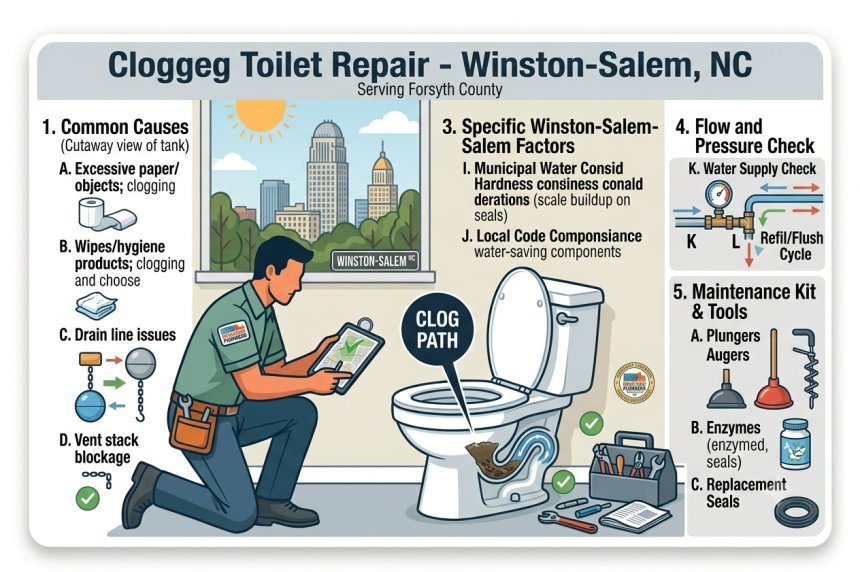
Common Causes of Toilet Clogs
Toilets are designed to handle human waste and toilet paper. Flushing unsuitable materials can create blockages.
Common causes include:
- Excessive toilet paper
- Wipes
- Paper towels
- Hygiene products
- Foreign objects
- Excessive waste
- Mineral buildup
- Low-flow flushing problems
- Drain line blockages
- Tree root intrusion in larger sewer lines
Objects accidentally dropped into the toilet can also become lodged inside the trap.
Signs of a Clogged Toilet
A complete blockage is easy to recognize, but partial clogs can develop gradually.
Warning signs include:
- Slow flushing
- Water rising in the bowl
- Water draining slowly
- Gurgling sounds
- Repeated toilet backups
- Weak flushing
- Water level changes
- Unpleasant odors
- Toilet overflowing
If the bowl begins filling rapidly after flushing, stop using the toilet until the blockage is addressed.
Toilet Trap Clogs
The curved passage inside the toilet is designed to hold water and prevent sewer gases from entering the home.
However, this curved area can also trap foreign objects and excessive material.
If the blockage is located in the toilet trap, appropriate mechanical tools may be needed to clear it without damaging the fixture.
Toilet Paper and Waste Buildup
Using excessive amounts of toilet paper can contribute to toilet clogs.
Older toilets or toilets with flushing problems may be more likely to struggle with heavy material.
If the toilet repeatedly clogs despite normal use, the issue may involve the fixture itself or a deeper drainage problem.
Foreign Objects in the Toilet
Children, pets, and household activities can sometimes result in objects accidentally entering a toilet.
Examples include:
- Small toys
- Personal care items
- Cleaning materials
- Plastic objects
- Other household items
If a solid object is suspected, repeatedly flushing the toilet can make the situation worse.
Multiple Toilets Clogged
If more than one toilet is clogged at the same time, the problem may not be limited to a single fixture.
A blockage in a shared drain or sewer line can affect multiple fixtures.
Other warning signs can include:
- Multiple slow drains
- Sewer odors
- Water backing up
- Gurgling drains
- Wastewater appearing in another fixture
These symptoms may require professional drain or sewer inspection.
Toilet Overflow Prevention
If a toilet is overflowing, stop flushing immediately.
If you know how to safely stop the water supply, closing the toilet's shutoff valve can help prevent additional water from entering the bowl.
Avoid continuing to flush a toilet that is already backed up.
If wastewater is involved, take appropriate hygiene precautions and seek professional plumbing service.
Professional Clogged Toilet Repair Process
A plumber may first determine whether the clog is located within the toilet or farther down the drain line.
The process may include:
- Inspecting the toilet
- Checking the water level
- Assessing flushing performance
- Determining likely blockage location
- Using appropriate mechanical equipment
- Removing the obstruction
- Checking the connected drain
- Testing the toilet
- Inspecting for additional problems
- Recommending further repair if necessary
The equipment used depends on the location and severity of the blockage.
Can a Plunger Clear a Toilet Clog?
A plunger may help with some minor toilet clogs.
However, not every blockage responds to plunging.
If the clog remains, repeatedly forcing water through the toilet may increase the risk of overflow.
A deeper or solid obstruction may require professional equipment.
Can Chemical Drain Cleaners Be Used in Toilets?
Chemical drain cleaners are not appropriate for every toilet or plumbing system.
They may also create safety concerns and may not remove solid objects or deeper blockages.
For persistent or severe toilet clogs, professional mechanical drain clearing may be more appropriate.
Recurring Toilet Clogs
A toilet that repeatedly clogs may indicate an underlying problem.
Possible causes include:
- Partial drain blockage
- Improper toilet operation
- Damaged plumbing
- Low flushing performance
- Foreign objects
- Main sewer line problems
If the same toilet continues to clog, identifying the underlying cause is more useful than repeatedly clearing temporary blockages.
How Much Does Clogged Toilet Repair Cost?
The cost depends on the location and severity of the blockage.
Factors may include:
- Toilet design
- Type of blockage
- Depth of obstruction
- Equipment required
- Labor
- Accessibility
- Additional drain problems
- Toilet replacement if necessary
A simple fixture-level clog may require less work than a blockage deep within the home's main drain line.
Preventing Toilet Clogs
Homeowners can reduce the risk of toilet blockages by:
- Flushing only appropriate materials
- Avoiding excessive toilet paper
- Keeping wipes and hygiene products out of the toilet
- Teaching children what should not be flushed
- Addressing weak flushing
- Responding to slow drainage early
- Avoiding unnecessary chemical drain cleaners
Proper toilet use is one of the simplest ways to prevent clogs.
When to Call a Plumber
Professional toilet service may be needed when:
- The toilet is completely blocked
- Water repeatedly rises in the bowl
- The toilet overflows
- The clog keeps returning
- Multiple drains are affected
- There is a sewage odor
- A foreign object is stuck
- A plunger does not resolve the issue
- Wastewater backs up into another fixture
A plumber can determine whether the problem is limited to the toilet or involves a larger drain line.
Frequently Asked Questions
What causes a toilet to clog?
Common causes include excessive toilet paper, wipes, foreign objects, waste buildup, and blockages farther down the drain line.
Can I unclog a toilet with a plunger?
A plunger can clear some minor clogs. Persistent or deep blockages may require professional equipment.
Why does my toilet keep clogging?
Recurring clogs may indicate a partial drain blockage, foreign object, poor flushing performance, damaged plumbing, or a larger sewer problem.
Should I use chemical drain cleaner for a clogged toilet?
Chemical drain cleaners are not suitable for every toilet and may create safety concerns. Professional mechanical clearing may be preferable for persistent clogs.
What should I do if my toilet is overflowing?
Stop flushing immediately and, if safe and accessible, shut off the toilet's water supply. Contact a plumber if the blockage cannot be resolved.
Can a plumber remove a deep toilet clog?
Yes. Professional drain-cleaning equipment can be used to address blockages located deeper in the plumbing system.
Final Thoughts
A clogged toilet can quickly become a disruptive and messy plumbing problem. While a minor blockage may sometimes be cleared with a plunger, recurring or severe clogs can indicate a deeper issue.
Professional clogged toilet repair in Winston-Salem, NC can help identify the cause, remove the blockage, and determine whether additional plumbing work is necessary. Proper toilet use and early attention to slow flushing can help prevent future problems.
Share
What's Your Reaction?
 Like
0
 Dislike
0
 Love
0
 Funny
0
 Angry
0
 Sad
0
 Wow
0