Low Water Pressure Repair in Winston-Salem, NC
Learn about low water pressure repair in Winston-Salem, NC, including common causes, warning signs, plumbing inspections, repair options, costs, prevention, and when to call a professional plumber.

Low Water Pressure Repair in Winston-Salem, NC
Water pressure affects many everyday plumbing activities. Showers, faucets, toilets, washing machines, dishwashers, and other fixtures depend on adequate water flow.
When water pressure becomes noticeably weaker, the problem can make normal household tasks frustrating. A shower may have weak flow, a faucet may take longer to fill a container, or multiple fixtures may struggle to operate at the same time.
Professional low water pressure repair in Winston-Salem, NC can help determine whether the problem is caused by a fixture, plumbing pipe, valve, water line, pressure-regulating equipment, or another issue.
Low water pressure does not always have one obvious cause. Understanding where and when the pressure drops can provide useful information during diagnosis.
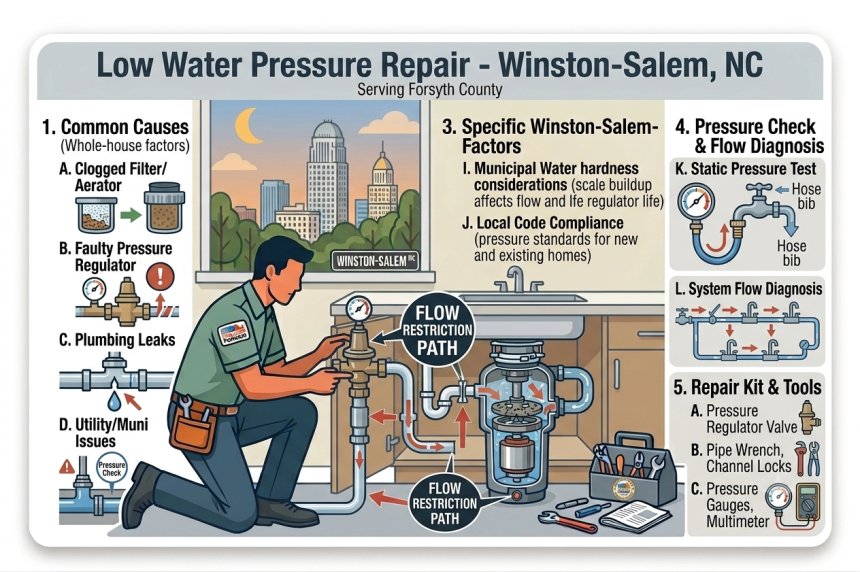
Common Causes of Low Water Pressure
Several plumbing problems can result in reduced water pressure.
Common causes include:
-
Partially closed shutoff valves
-
Clogged faucet aerators
-
Mineral buildup
-
Corroded pipes
-
Leaking pipes
-
Water line problems
-
Faulty pressure-regulating equipment
-
Plumbing fixture restrictions
-
Pipe blockages
-
Water supply issues
-
Damaged underground water lines
-
Multiple fixtures operating simultaneously
The correct repair depends on where the pressure problem originates.
Low Water Pressure Throughout the House
If every faucet and shower in the home has weak water pressure, the issue may involve the main plumbing supply rather than a single fixture.
Possible causes include:
-
Main shutoff valve problems
-
Pressure-regulating equipment
-
Main water line problems
-
Pipe deterioration
-
Plumbing leaks
-
Supply-side issues
A professional plumber can test the system and determine whether the pressure problem affects the entire property.
Low Water Pressure at One Faucet
If only one faucet has low pressure, the problem may be localized.
Possible causes include:
-
Clogged aerator
-
Mineral buildup
-
Faucet cartridge problem
-
Partially closed valve
-
Supply hose restriction
Cleaning or replacing a restricted component may restore normal flow in some situations.
If other fixtures have normal pressure, a plumber may focus on the individual faucet and its supply connections.
Low Shower Pressure
Low shower pressure can make bathing uncomfortable and may occur for several reasons.
Potential causes include:
-
Clogged showerhead
-
Mineral buildup
-
Shower valve problems
-
Restricted supply pipe
-
Plumbing pressure issue
-
Flow restriction
-
Older plumbing components
Removing buildup from the showerhead may help if the problem is localized. If the entire home has low pressure, however, the cause may be farther upstream.
Low Hot Water Pressure
Sometimes homeowners experience normal cold-water pressure but weak hot-water flow.
This can point toward a problem involving:
-
Water heater connections
-
Hot-water supply pipes
-
Faucet cartridge
-
Sediment or mineral buildup
-
Partially closed valve
-
Corroded plumbing
A plumber can compare hot and cold water flow to help identify the source.
Low Cold Water Pressure
Weak cold-water flow can also occur independently of hot-water problems.
Potential causes include:
-
Supply valve restriction
-
Faucet blockage
-
Main water line problem
-
Pipe corrosion
-
Underground leak
-
Plumbing obstruction
A professional pressure test can help determine whether the issue is isolated or system-wide.
Sudden Drop in Water Pressure
A sudden pressure change deserves attention, particularly if it affects multiple fixtures.
Possible causes include:
-
Water line leak
-
Broken plumbing component
-
Valve problem
-
Main line issue
-
Pressure-regulating equipment failure
-
Unexpected restriction
If a major pressure drop occurs together with wet areas, unexplained water use, or visible leaks, prompt plumbing inspection is recommended.
Gradual Decline in Water Pressure
A gradual decrease in pressure can have different causes from a sudden pressure loss.
Long-term problems may include:
-
Mineral buildup
-
Pipe corrosion
-
Aging plumbing
-
Gradual valve deterioration
-
Increasing internal pipe restriction
-
Developing water line problems
Older plumbing systems may be particularly susceptible to internal buildup and deterioration.
Water Pressure and Corroded Pipes
Older metal pipes can deteriorate internally over time.
Corrosion and mineral accumulation can reduce the interior diameter of a pipe, restricting water flow.
In these situations, cleaning one faucet may not solve the underlying problem.
If multiple fixtures experience reduced flow, professional inspection can help determine whether sections of the plumbing system need repair or replacement.
Water Pressure and Plumbing Leaks
A significant plumbing leak can affect available water pressure.
Signs of a possible hidden leak may include:
-
Sudden pressure changes
-
Unexpected water usage
-
Damp areas
-
Water stains
-
Sounds of running water
-
Wet soil near an outdoor water line
-
Persistent plumbing problems
Not every pressure problem is caused by a leak, but unexplained changes should be investigated.
Main Water Line Problems
The main water line supplies water to the property.
Damage or restrictions in this line can affect pressure throughout the home.
Potential problems include:
-
Underground leaks
-
Pipe corrosion
-
Cracks
-
Connection problems
-
Root intrusion in some plumbing systems
-
Aging materials
A plumber may use pressure testing and other diagnostic methods to determine whether the main line is involved.
Pressure-Regulating Equipment
Some properties use pressure-regulating equipment to control incoming water pressure.
If this equipment malfunctions, water pressure may become too low, too high, or inconsistent.
A professional plumber can inspect the equipment and determine whether adjustment, repair, or replacement is appropriate.
Faucet Aerators and Mineral Buildup
Faucet aerators are small components that can collect mineral deposits and debris.
A restricted aerator can significantly reduce flow at an individual faucet.
If the pressure problem occurs only at one fixture, checking the aerator and other faucet components can be a useful first step.
Professional Low Water Pressure Diagnosis
A plumber may follow several steps to identify the source of low water pressure.
The process may include:
-
Asking where the pressure problem occurs
-
Checking multiple fixtures
-
Testing water pressure
-
Inspecting visible valves
-
Checking faucets and showerheads
-
Looking for leaks
-
Evaluating water supply lines
-
Inspecting pressure-regulating equipment
-
Checking for pipe restrictions
-
Recommending the appropriate repair
The diagnostic process depends on whether the issue is isolated or affects the entire property.
How Much Does Low Water Pressure Repair Cost?
The cost varies significantly because low water pressure can have many different causes.
Factors may include:
-
Fixture condition
-
Location of the problem
-
Required replacement parts
-
Pipe accessibility
-
Water line condition
-
Labor
-
Diagnostic requirements
-
Repair complexity
-
Whether pipe replacement is necessary
Replacing a clogged aerator is very different from repairing a damaged main water line.
A professional inspection can provide a clearer understanding of the required work.
Repairing Low Water Pressure
The appropriate repair depends on the source.
Potential solutions may include:
-
Cleaning a clogged aerator
-
Replacing a faucet component
-
Opening or repairing a valve
-
Repairing a leaking pipe
-
Replacing damaged plumbing
-
Servicing pressure-regulating equipment
-
Repairing a water supply line
-
Replacing severely deteriorated pipes
The goal is to address the underlying cause rather than simply treating the symptom.
Can Low Water Pressure Be Prevented?
Regular plumbing maintenance can help identify some developing problems.
Homeowners can:
-
Monitor changes in water pressure
-
Address leaks quickly
-
Clean fixture aerators
-
Maintain plumbing fixtures
-
Watch for corrosion
-
Inspect accessible valves
-
Schedule professional inspections when needed
-
Address unusual water usage
Maintenance cannot prevent every plumbing problem, but early attention can help reduce the chance of small issues becoming larger ones.
Low Water Pressure in Older Homes
Older homes may have plumbing systems made from materials that can deteriorate or accumulate mineral deposits over time.
If several fixtures have weak water flow, the plumbing system may require a more detailed evaluation.
In some cases, replacing a deteriorated section of pipe may provide a longer-term solution than repeatedly servicing individual fixtures.
Low Water Pressure After Plumbing Work
Pressure can sometimes change after plumbing repairs, renovations, or fixture installation.
Possible causes include:
-
Valve not fully opened
-
Debris entering a fixture
-
Incorrect connection
-
New fixture restriction
-
Plumbing configuration changes
If pressure changed immediately after plumbing work, the recent work should be considered during diagnosis.
When to Call a Plumber
Professional low water pressure service may be appropriate when:
-
The entire house has weak pressure
-
Pressure suddenly drops
-
Multiple fixtures are affected
-
There is a suspected leak
-
Water pressure fluctuates
-
A main water line may be damaged
-
Pipes appear corroded
-
Basic fixture cleaning does not help
-
The problem keeps returning
Prompt diagnosis can help identify the cause before additional plumbing problems develop.
Frequently Asked Questions
Why is my water pressure suddenly low?
A sudden pressure drop may be caused by a leak, valve problem, water line issue, pressure-regulating equipment problem, or another plumbing restriction.
Why does only one faucet have low pressure?
A clogged aerator, faucet cartridge, supply hose, or local valve problem may restrict flow at one fixture.
Can a water leak cause low water pressure?
A significant leak can reduce available pressure, particularly when multiple fixtures are affected.
Why is my shower pressure low?
A clogged showerhead, mineral buildup, shower valve issue, restricted pipe, or broader plumbing pressure problem may be responsible.
Can old pipes cause low water pressure?
Yes. Internal corrosion and mineral buildup can reduce the effective opening inside older pipes and restrict water flow.
How is low water pressure diagnosed?
A plumber may test pressure at multiple fixtures, inspect valves and supply lines, look for leaks, and evaluate pressure-regulating equipment.
Final Thoughts
Low water pressure can be caused by something as simple as a clogged faucet aerator or as complex as deteriorated plumbing or a damaged water supply line. Determining where the pressure problem occurs is an important part of finding the correct solution.
Professional low water pressure repair in Winston-Salem, NC can help identify the underlying cause and determine whether a fixture repair, valve service, pipe repair, or larger plumbing solution is needed. Addressing pressure changes early can help protect the plumbing system and restore more consistent water flow.
Share
What's Your Reaction?
 Like
0
 Dislike
0
 Love
0
 Funny
0
 Angry
0
 Sad
0
 Wow
0