Sump Pump Repair in Winston-Salem, NC
Learn about sump pump repair in Winston-Salem, NC, including common pump problems, warning signs, troubleshooting, repair options, maintenance, costs, and when to call a professional plumber.

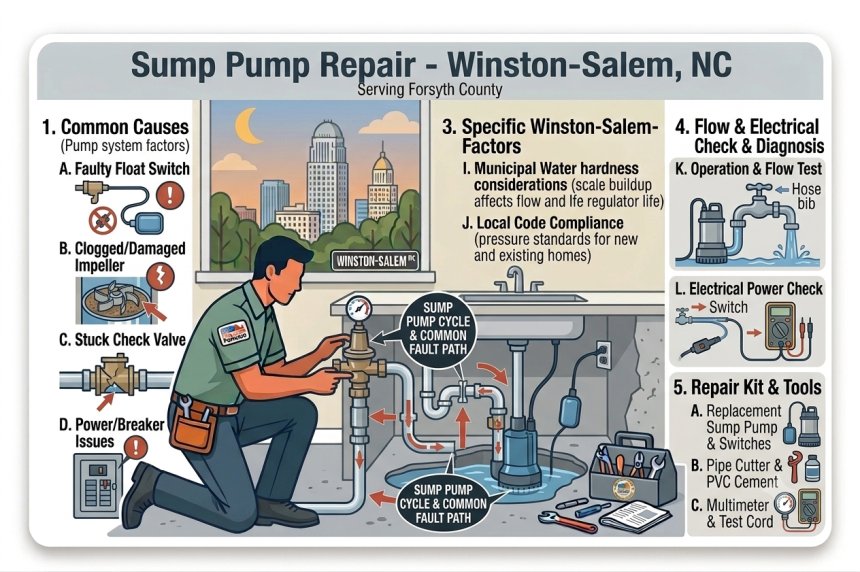
Sump Pump Repair in Winston-Salem, NC
A sump pump plays an important role in protecting areas of a home that are vulnerable to groundwater or water accumulation. When the pump is working properly, it can move collected water away from the property through an appropriate discharge system.
When a sump pump stops working, runs continuously, makes unusual sounds, or fails to remove water, professional sump pump repair in Winston-Salem, NC can help identify the cause and determine the appropriate solution.
Sump pump problems should not be ignored, especially when water is already collecting in the sump pit or basement area. A malfunctioning pump can leave the property vulnerable to water damage.
What Does a Sump Pump Do?
A sump pump is typically installed in a sump pit at the lowest point of an area that needs protection from water accumulation.
When water enters the pit, the pump activates and moves the water through a discharge pipe away from the property.
Depending on the installation, a sump system may help manage:
-
Groundwater
-
Rain-related water accumulation
-
Drainage around the foundation
-
Water entering a basement or lower-level area
The effectiveness of the system depends on proper installation, pump condition, discharge routing, and regular maintenance.
Common Sump Pump Problems
Several issues can affect sump pump performance.
Common problems include:
-
Pump will not turn on
-
Pump runs continuously
-
Pump runs but does not remove water
-
Sump pit fills with water
-
Pump makes unusual noises
-
Float switch gets stuck
-
Discharge pipe is blocked
-
Check valve problem
-
Electrical supply failure
-
Pump motor failure
-
Improper installation
-
Backup system failure
Identifying the exact cause is important before replacing the entire system.
Sump Pump Will Not Turn On
A sump pump that does not activate may have an electrical, switch, or mechanical problem.
Possible causes include:
-
Power outage
-
Tripped circuit
-
Disconnected power
-
Faulty float switch
-
Damaged motor
-
Internal electrical failure
Homeowners can check whether the pump is receiving power, but electrical repairs should be handled with appropriate safety precautions.
Sump Pump Runs but Does Not Remove Water
If the motor operates but water remains in the sump pit, the problem may involve the discharge system or pump itself.
Possible causes include:
-
Blocked discharge pipe
-
Damaged impeller
-
Check valve issue
-
Disconnected discharge pipe
-
Pump that is too small for the application
-
Mechanical failure
A professional inspection can help determine whether the problem is inside the pump or downstream in the discharge system.
Sump Pump Runs Continuously
A pump that never seems to shut off can experience excessive wear.
Possible causes include:
-
High water levels
-
Float switch problem
-
Improper switch positioning
-
Discharge restriction
-
Continuous water inflow
-
Pump sizing problem
-
Plumbing or drainage issue
The reason for continuous operation should be identified rather than simply allowing the pump to run continuously.
Sump Pump Makes Strange Noises
Unusual sounds can indicate a mechanical issue.
Possible causes include:
-
Loose components
-
Debris
-
Damaged impeller
-
Motor wear
-
Improper installation
-
Discharge pipe vibration
Different sounds can provide clues, but professional inspection may be necessary to determine the exact problem.
Float Switch Problems
Many sump pumps use a float switch to detect rising water levels.
If the switch becomes stuck or obstructed, the pump may:
-
Fail to start
-
Run continuously
-
Start at the wrong water level
-
Cycle too frequently
The float should have enough room to move freely.
If the switch is damaged or repeatedly malfunctions, replacement may be necessary.
Blocked Sump Pump Discharge Pipe
The discharge pipe carries water away from the sump pump.
A blockage can prevent the system from removing water effectively.
Possible causes include:
-
Debris
-
Ice in appropriate climates
-
Dirt
-
Improper discharge routing
-
Pipe damage
-
Obstruction at the outlet
If the pump is operating but water is not being discharged properly, the discharge system should be inspected.
Check Valve Problems
A check valve helps prevent discharged water from flowing back toward the sump pit.
If the valve fails, water may return to the pit after the pump shuts off.
This can cause:
-
Frequent pump cycling
-
Increased water level
-
Additional motor wear
-
Reduced pumping efficiency
A plumber can inspect the check valve and determine whether replacement is needed.
Sump Pump Electrical Problems
Sump pumps depend on a reliable electrical supply.
Potential problems include:
-
Tripped breaker
-
Damaged outlet
-
Power interruption
-
Faulty connection
-
Pump motor failure
Because water and electricity can create serious hazards, electrical issues should be handled carefully.
Sump Pump Motor Failure
The pump motor is responsible for driving the pumping mechanism.
Motor failure may occur because of:
-
Age
-
Excessive use
-
Mechanical wear
-
Electrical problems
-
Internal damage
If the motor has failed, replacing the pump may be more practical than attempting extensive repairs, depending on the model and condition.
Why Sump Pump Maintenance Matters
Sump pumps may sit unused for extended periods and then be needed during heavy rain or periods of increased groundwater.
Regular maintenance can help identify problems before the system is urgently needed.
Maintenance may include:
-
Testing the pump
-
Checking the float switch
-
Inspecting the discharge pipe
-
Checking the check valve
-
Removing debris from the pit
-
Examining electrical connections
-
Listening for unusual noises
Professional Sump Pump Repair Process
A professional plumber may evaluate the entire sump system rather than looking only at the pump.
The process can include:
-
Inspecting the sump pit
-
Testing the pump
-
Checking the float switch
-
Inspecting the electrical supply
-
Checking the discharge pipe
-
Evaluating the check valve
-
Looking for blockages
-
Assessing pump condition
-
Determining whether repair or replacement is appropriate
-
Testing the system after service
This approach can help identify problems that might otherwise be missed.
Sump Pump Repair or Replacement?
Not every sump pump problem requires a new pump.
Repair may be appropriate when the problem involves:
-
Switch adjustment
-
Blockage
-
Loose connection
-
Check valve
-
Discharge issue
-
Another replaceable component
Replacement may be considered when:
-
The motor has failed
-
The pump is significantly worn
-
Repairs are becoming frequent
-
The system is unreliable
-
Replacement parts are unavailable
-
The pump is not appropriately sized
The best option depends on the pump's condition and the nature of the failure.
How Much Does Sump Pump Repair Cost?
Sump pump repair costs vary based on the problem and system configuration.
Factors may include:
-
Pump type
-
Replacement parts
-
Labor
-
Accessibility
-
Electrical work
-
Discharge pipe condition
-
Extent of damage
-
Whether the entire pump must be replaced
-
Emergency service requirements
A simple switch or discharge issue can differ significantly from complete pump replacement.
What Happens If a Sump Pump Fails?
A failed sump pump may allow water to accumulate in the sump pit.
Depending on the property's drainage conditions, this can contribute to:
-
Basement water
-
Dampness
-
Property damage
-
Mold and moisture concerns
-
Damage to stored belongings
-
Problems with flooring or walls
If water is already accumulating, homeowners should address the situation promptly.
Backup Sump Pump Systems
Some properties use a secondary sump pump or backup system to provide additional protection if the primary pump fails or power is interrupted.
Backup options can include:
-
Secondary pumps
-
Battery-powered systems
-
Water-powered backup systems where appropriate
-
Backup power solutions
The appropriate setup depends on the property and existing plumbing system.
How to Maintain a Sump Pump
Homeowners can take several steps to keep a sump pump in working condition.
Recommended maintenance may include:
-
Testing the pump periodically
-
Keeping the sump pit free of debris
-
Checking the float switch
-
Inspecting the discharge pipe
-
Checking for unusual sounds
-
Verifying that water is discharged properly
-
Following manufacturer maintenance instructions
Regular maintenance is especially important before periods when the pump is likely to be needed.
When to Call a Plumber
Professional sump pump service may be appropriate when:
-
The pump will not turn on
-
The pump runs continuously
-
Water remains in the sump pit
-
The discharge pipe is blocked
-
The pump makes unusual noises
-
The float switch does not work correctly
-
The system repeatedly fails
-
Water is entering the basement
-
You are unsure whether the pump is operating properly
Prompt service can help restore the system before water accumulation causes additional problems.
Frequently Asked Questions
Why is my sump pump not working?
Possible causes include electrical problems, a faulty float switch, motor failure, a blocked discharge pipe, or mechanical damage.
Why does my sump pump keep running?
Continuous operation may be caused by high water levels, a stuck float switch, discharge restrictions, continuous water inflow, or an improperly sized pump.
How often should a sump pump be tested?
A sump pump should be tested periodically according to the manufacturer's recommendations and inspected when warning signs appear.
Can a sump pump be repaired?
Some problems involving switches, valves, blockages, and connections may be repairable. A severely worn or failed pump may need replacement.
Why does water remain in my sump pit?
The pump may not be removing water effectively because of a blocked discharge pipe, mechanical failure, switch problem, or other system issue.
Is a backup sump pump necessary?
A backup system can provide additional protection when the primary pump fails or electrical power is interrupted. Whether one is appropriate depends on the property and its water-management needs.
Final Thoughts
A sump pump is an important part of water management for properties that experience water accumulation around lower-level areas. A pump that fails to start, runs continuously, makes unusual noises, or does not discharge water properly should be inspected.
Professional sump pump repair in Winston-Salem, NC can help identify the cause of the problem and determine whether repair, component replacement, or a new pump is appropriate. Regular testing and maintenance can also help homeowners identify problems before the sump pump is urgently needed.
Share
What's Your Reaction?
 Like
0
 Dislike
0
 Love
0
 Funny
0
 Angry
0
 Sad
0
 Wow
0