Sump Pump Replacement in Winston-Salem
Learn about sump pump replacement in Winston-Salem, NC, including signs of pump failure, replacement options, installation steps, costs, maintenance, backup systems, and when professional service is needed.

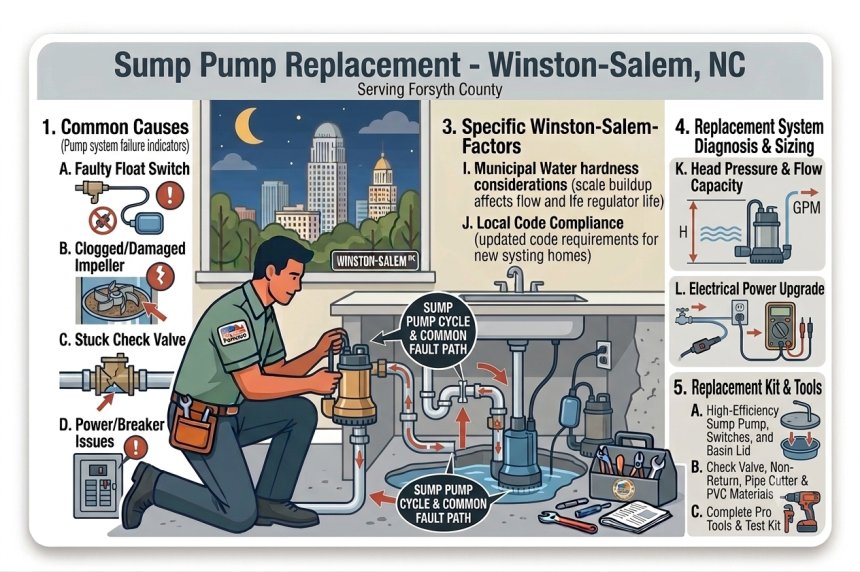
Sump Pump Replacement in Winston-Salem, NC
A sump pump is an important part of a home's water-management system when water collects in a sump pit. The pump removes accumulated water and directs it through a discharge line away from the property.
Like other mechanical equipment, a sump pump can eventually wear out. When the pump becomes unreliable, repairing individual components may not always be the most practical solution. In these situations, professional sump pump replacement in Winston-Salem, NC can help restore dependable water removal.
A sump pump may operate for long periods without being noticed, then suddenly become essential when water begins entering the sump pit. Replacing an aging or frequently failing pump before a major water event can help homeowners reduce the risk of unexpected problems.
Signs You May Need a New Sump Pump
A sump pump does not always fail without warning.
Common signs that replacement may be necessary include:
- Pump does not start
- Pump runs continuously
- Frequent cycling
- Loud or unusual noises
- Excessive vibration
- Water remains in the sump pit
- Repeated motor problems
- Frequent electrical issues
- Discharge problems
- Recurring repairs
- Visible corrosion or deterioration
- Pump has reached the end of its service life
A professional inspection can determine whether the existing pump can be repaired or whether replacement is more appropriate.
Sump Pump Stops Working
A sump pump that does not activate when the water level rises can create a serious drainage concern.
Possible causes include:
- Failed motor
- Faulty float switch
- Power interruption
- Damaged electrical components
- Mechanical obstruction
- Pump deterioration
If the pump itself has failed, replacing it may be necessary.
Sump Pump Runs Continuously
Continuous operation does not automatically mean the pump needs replacement.
The cause may involve:
- Excessive water entering the pit
- Blocked discharge line
- Faulty check valve
- Float switch problem
- Incorrect pump capacity
- Drainage configuration
However, continuous operation can place additional stress on the motor. If the problem continues after the plumbing system has been evaluated, pump replacement may be considered.
Frequent Sump Pump Cycling
A sump pump that turns on and off repeatedly may experience additional wear.
Possible reasons include:
- Improper float adjustment
- Small sump pit
- Check valve problem
- Discharge issue
- High water inflow
- Pump configuration problems
A plumber can determine whether the cycling is caused by the pump itself or another part of the system.
Unusual Sump Pump Noises
Noise changes can indicate that the pump is experiencing mechanical stress.
Potential warning sounds include:
- Grinding
- Rattling
- Humming
- Clicking
- Vibrating
- Loud motor sounds
A damaged impeller, worn motor, loose component, or obstruction may be responsible.
If the pump is older and experiencing repeated mechanical problems, replacement may be more practical than continued repairs.
Water Remains in the Sump Pit
The primary purpose of a sump pump is to remove water from the pit.
If water remains at a high level while the pump is running, possible causes include:
- Weak pump performance
- Blocked discharge line
- Check valve failure
- Improper pump capacity
- Damaged pump
- Excessive water inflow
A professional can inspect the complete system before recommending replacement.
Why Sump Pump Age Matters
Sump pumps experience mechanical and electrical wear over time.
An older pump may still work, but repeated problems can make its reliability uncertain.
Factors to consider include:
- Age of the pump
- Frequency of repairs
- Motor condition
- Operating environment
- Amount of water handled
- Maintenance history
- Overall system condition
Age alone does not automatically mean replacement is required. The condition and performance of the pump should also be considered.
Choosing the Right Replacement Sump Pump
Different properties may require different sump pump configurations.
Important considerations can include:
- Pump capacity
- Sump pit size
- Vertical lift
- Discharge pipe configuration
- Water inflow
- Pump design
- Electrical requirements
- Manufacturer specifications
Choosing a pump based only on price or motor size may not provide the right solution.
A professional plumber can evaluate the existing system and recommend equipment appropriate for the property's needs.
Submersible and Pedestal Sump Pumps
Two common sump pump designs are submersible and pedestal pumps.
Submersible Sump Pumps
A submersible pump is designed to operate within the sump pit.
Potential advantages include:
- Quieter operation
- Compact installation
- Motor positioned below the water level
- Suitable for many basement applications
Pedestal Sump Pumps
A pedestal pump has its motor positioned above the sump pit.
Potential benefits may include easier access to the motor and a different installation configuration.
The appropriate pump depends on the property, sump pit, water conditions, and installation requirements.
Professional Sump Pump Replacement Process
A professional replacement typically involves more than simply removing the old pump and placing a new one.
The process may include:
- Inspecting the existing sump pump
- Evaluating the sump pit
- Checking the electrical supply
- Inspecting the discharge pipe
- Checking the check valve
- Removing the old pump
- Installing the replacement pump
- Connecting the discharge system
- Checking the float mechanism
- Testing pump operation
- Verifying water removal
- Inspecting the completed installation
The exact process varies depending on the pump design and existing plumbing configuration.
Replacing the Sump Pump Motor
In some situations, a motor-related repair may be possible.
However, if the motor has failed and the pump is older or has other deteriorating components, complete replacement may be considered.
Replacing the entire pump can provide a new set of working components rather than continuing to service an aging unit.
Sump Pump Discharge Pipe Inspection
The pump can only work effectively if the discharged water has a suitable path away from the property.
During replacement, a plumber may inspect:
- Discharge pipe
- Connections
- Check valve
- Pipe condition
- Blockages
- Discharge location
A new pump will not solve a blocked or poorly configured discharge system by itself.
Check Valve Replacement
A check valve helps prevent discharged water from flowing backward into the sump pit.
A faulty check valve can cause:
- Frequent pump cycling
- Additional motor workload
- Water returning to the pit
- Unusual pump operation
If the check valve is damaged or worn, replacement may be performed at the same time as the sump pump.
Sump Pump Backup Systems
Some homeowners choose to install a backup sump pump system for additional protection.
A backup system may help if:
- The primary pump fails
- Electrical power is interrupted
- Water inflow becomes unusually high
- The primary pump cannot keep up with incoming water
Backup options vary, including battery-powered systems and secondary pumps.
The appropriate backup solution depends on the property's needs and existing plumbing setup.
Battery Backup Sump Pumps
A battery backup can provide an alternative source of pumping capacity during certain power interruptions.
Homeowners considering a backup system should evaluate:
- Battery capacity
- Expected runtime
- Pump capacity
- Maintenance requirements
- Alarm features
- Installation configuration
Backup systems also require maintenance and should be tested periodically according to manufacturer recommendations.
Primary Pump and Backup Pump Installation
Some properties may benefit from having both a primary and backup pump.
The primary pump handles normal operation, while the backup system can provide additional protection if the primary system fails.
Professional installation can help ensure that both systems are positioned and connected correctly.
How Much Does Sump Pump Replacement Cost?
The cost of sump pump replacement varies depending on the equipment and installation requirements.
Factors may include:
- Pump type
- Pump capacity
- Brand and model
- Sump pit configuration
- Discharge pipe condition
- Check valve
- Electrical requirements
- Backup system
- Labor
- Accessibility
- Required plumbing modifications
Replacing only the pump can be different from installing a complete primary and backup system.
A professional inspection can provide a more accurate estimate based on the existing installation.
Repair or Replace a Sump Pump?
Homeowners often wonder whether repairing the existing pump is better than replacing it.
Repair may be appropriate when:
- The pump is relatively new
- The problem involves a replaceable component
- The motor remains in good condition
- The repair is straightforward
Replacement may be considered when:
- The motor has failed
- The pump is old
- Repairs are frequent
- Performance is unreliable
- The pump is severely worn
- The existing pump is not suitable for the property
A professional plumber can evaluate the condition before recommending either option.
Preventing Premature Sump Pump Failure
Proper maintenance can help extend the service life of a sump pump.
Homeowners can:
- Test the pump periodically
- Keep the sump pit clear
- Inspect the float switch
- Check the discharge pipe
- Listen for unusual sounds
- Watch for frequent cycling
- Follow manufacturer maintenance instructions
- Inspect backup systems when installed
Maintenance does not guarantee that a pump will never fail, but it can help identify problems earlier.
Testing a New Sump Pump
After installation, the replacement pump should be tested to confirm proper operation.
A professional may verify:
- Pump activation
- Float movement
- Water removal
- Discharge flow
- Check valve operation
- Electrical connection
- Pump cycling
Testing helps identify installation or equipment issues before the system is needed during a significant water event.
When to Replace a Sump Pump
Replacement may be worth discussing with a plumber when:
- The pump frequently fails
- Repairs are becoming common
- The motor is damaged
- Water remains in the pit
- The pump is very noisy
- The unit is severely worn
- The pump is not appropriately sized
- The property needs a backup system
- The existing discharge setup has changed
The best timing depends on the condition of the system and the property's water-management needs.
When to Call a Plumber
Professional sump pump replacement service may be needed when:
- The existing pump has stopped working
- The pump cannot remove water effectively
- The motor has failed
- The pump repeatedly cycles
- The discharge line has problems
- The check valve is damaged
- A backup system is needed
- The pump requires electrical or plumbing work
- You are unsure which replacement pump is appropriate
Professional installation can help ensure the new pump works with the existing drainage system.
Frequently Asked Questions
How do I know if my sump pump needs replacement?
Frequent failures, unusual noises, poor water removal, motor problems, repeated repairs, and severe wear can indicate that replacement should be considered.
How long does sump pump replacement take?
The time depends on the existing installation, pump type, discharge system, accessibility, and whether additional plumbing work is required.
Can I replace a sump pump myself?
Some homeowners may have experience with basic pump replacement, but electrical connections, discharge plumbing, and proper pump sizing can require professional knowledge. Professional installation can help ensure the system is configured correctly.
Should I replace my sump pump before it fails?
If an older pump is showing repeated signs of deterioration, planned replacement may reduce the risk of unexpected failure. A plumber can evaluate the condition and explain the available options.
Do I need a backup sump pump?
A backup system may provide additional protection against primary pump failure or certain power interruptions. The appropriate setup depends on the property.
How much does a new sump pump cost?
Costs vary according to pump type, capacity, installation requirements, discharge modifications, labor, and whether a backup system is included.
Final Thoughts
A sump pump can be an important part of protecting a lower-level area from water accumulation. When an aging pump becomes unreliable, professional sump pump replacement in Winston-Salem, NC can help restore dependable water removal.
Before replacing the pump, the entire system should be evaluated, including the sump pit, float, discharge pipe, check valve, and electrical supply. Choosing suitable equipment and maintaining it properly can help support reliable operation when the system is needed.
Share
What's Your Reaction?
 Like
0
 Dislike
0
 Love
0
 Funny
0
 Angry
0
 Sad
0
 Wow
0