Water Heater Installation in Winston-Salem, NC
Learn about water heater installation in Winston-Salem, NC, including choosing the right system, installation considerations, tank and tankless options, costs, maintenance, and signs you may need a new water heater.

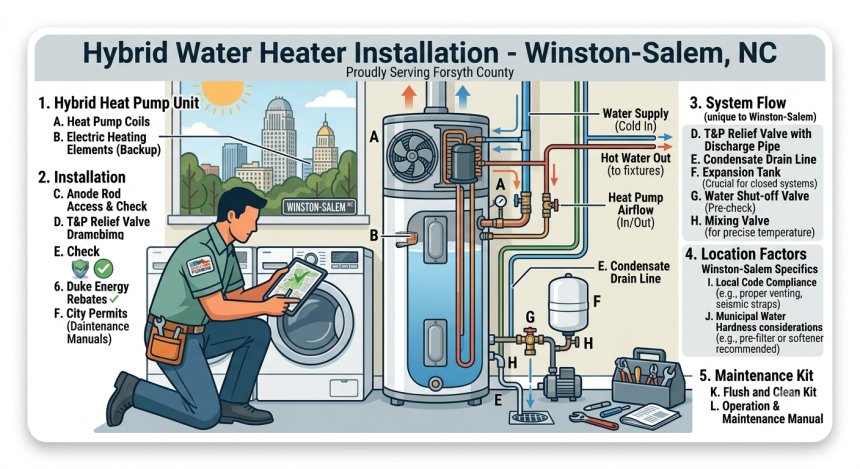
Water Heater Installation in Winston-Salem, NC
A dependable water heater is essential for comfortable everyday living. Hot water is needed for showers, washing dishes, laundry, cleaning, and many other household activities. When an existing water heater becomes unreliable or reaches the end of its service life, installing a new system may be the right solution.
Professional water heater installation in Winston-Salem, NC can help homeowners select and install a water heater that fits their household's hot water requirements, available space, fuel source, and plumbing setup.
Installing a water heater involves more than simply connecting a new appliance. The system must be properly sized, connected, tested, and installed according to applicable requirements and manufacturer instructions.
When Should You Install a New Water Heater?
Not every water heater problem requires replacement. However, several signs may indicate that installation of a new unit should be considered.
These include:
- Frequent repairs
- Persistent leaks
- Tank corrosion
- Inadequate hot water
- Major component failure
- Increasing operating problems
- Old equipment
- Significant efficiency concerns
- Repeated temperature fluctuations
If the tank itself has failed, replacement is generally more practical than attempting to repair the tank.
Choosing the Right Water Heater
Homeowners have several water heating options.
The right system depends on factors such as:
- Household size
- Hot water demand
- Available space
- Fuel source
- Plumbing configuration
- Installation requirements
- Budget
- Maintenance preferences
A professional plumber can help compare suitable options for the property.
Traditional Tank Water Heater Installation
Traditional water heaters store heated water in a tank.
They are available in different sizes and configurations.
Advantages can include:
- Familiar technology
- Straightforward operation
- Established installation methods
- Suitable capacity options
Proper sizing is important. A water heater that is too small may not provide enough hot water for the household, while an oversized unit may not be the most practical choice.
Tankless Water Heater Installation
Tankless water heaters heat water as it is needed.
Potential benefits include:
- On-demand hot water
- No large storage tank
- Space-saving design
- Potentially reduced standby heating losses
However, tankless systems may have specific installation requirements and may require adequate electrical or gas capacity.
Professional evaluation is recommended before selecting a tankless system.
Gas Water Heater Installation
Gas water heaters use gas to heat water.
Installation may involve considerations such as:
- Gas supply
- Venting
- Combustion air
- Plumbing connections
- Safety controls
- Location
- Applicable installation requirements
Gas water heater installation should be performed by appropriately qualified professionals.
Electric Water Heater Installation
Electric water heaters use electrical heating elements.
Installation considerations can include:
- Electrical capacity
- Circuit requirements
- Water connections
- Drainage
- Installation location
- Safety controls
A professional can evaluate whether the property's electrical system is suitable for the selected water heater.
Proper Water Heater Sizing
Correct sizing is one of the most important parts of installation.
A plumber may consider:
- Number of occupants
- Number of bathrooms
- Shower usage
- Appliance demand
- Household routines
- Available installation space
- Peak hot water demand
Choosing the correct capacity can help the system meet household needs without unnecessary oversizing.
Water Heater Installation Process
Professional installation generally involves several steps.
The process may include:
- Evaluating the existing water heater
- Determining household hot water requirements
- Selecting an appropriate replacement
- Preparing the installation area
- Disconnecting the old system
- Installing the new water heater
- Connecting water lines
- Connecting electrical or gas components as applicable
- Installing required safety components
- Testing the system
- Checking for leaks
- Confirming proper operation
The exact process depends on the type of water heater being installed.
Removing an Old Water Heater
Before installing a new system, the existing water heater must be properly disconnected and removed.
This may involve shutting off water and energy supplies, draining the tank when applicable, disconnecting plumbing connections, and safely moving the old unit.
Professional removal can help reduce the risk of water damage and installation-related problems.
Water Heater Location
The location of the water heater can affect installation requirements.
Factors may include:
- Available space
- Accessibility
- Drainage
- Water connections
- Electrical supply
- Gas supply
- Venting
- Safety requirements
The installation location should provide appropriate access for maintenance and future service.
Water Heater Installation Costs
The cost of installing a water heater varies significantly depending on the equipment and installation requirements.
Factors may include:
- Water heater type
- Unit size
- Brand and model
- Labor
- Plumbing modifications
- Electrical work
- Gas connections
- Venting requirements
- Removal of the old unit
- Installation location
A straightforward replacement can have different costs from a complete system change that requires plumbing, electrical, or gas modifications.
Water Heater Replacement vs Repair
Repair can be appropriate when the existing water heater remains in good condition.
Replacement may be more practical when:
- The tank is leaking
- The unit is heavily corroded
- Major components repeatedly fail
- Repairs are becoming frequent
- The system is old
- Hot water demand has changed
A professional plumber can evaluate the current unit and explain the available choices.
Benefits of Professional Installation
Professional installation can help ensure that the water heater is properly connected and tested.
Benefits may include:
- Correct sizing
- Proper plumbing connections
- Appropriate electrical or gas connections
- Leak testing
- System testing
- Safer installation
- Easier future maintenance
Following manufacturer instructions and applicable installation requirements is important for reliable operation.
Common Water Heater Installation Mistakes
Improper installation can create performance and safety concerns.
Potential mistakes include:
- Incorrect sizing
- Poorly secured connections
- Improper venting
- Inadequate electrical setup
- Incorrect temperature settings
- Missing safety components
- Poor drainage planning
- Improper placement
Professional installation can help reduce the likelihood of these problems.
Maintaining a Newly Installed Water Heater
Once the new system is installed, proper maintenance can help preserve performance.
Homeowners should:
- Follow manufacturer maintenance recommendations
- Monitor for leaks
- Pay attention to unusual noises
- Check for temperature changes
- Keep the area accessible
- Schedule recommended professional service
- Address problems early
Tankless systems may require periodic descaling or other maintenance depending on water conditions and manufacturer requirements.
How Long Does Water Heater Installation Take?
Installation time varies based on the type of water heater, location, existing connections, and whether modifications are required.
A straightforward replacement may be completed more quickly than an installation that requires new gas lines, electrical changes, venting modifications, or other plumbing work.
A professional can provide a more accurate estimate after inspecting the property.
When to Call a Water Heater Installer
Professional installation is recommended when:
- The existing tank is leaking
- The water heater is old
- Hot water is consistently inadequate
- Major components have failed
- Repairs are becoming frequent
- You want to switch from tank to tankless
- You need a larger or different system
- A new water heater is being installed in a remodeled property
Choosing the right system before installation can help prevent future capacity and compatibility problems.
Frequently Asked Questions
How do I know what size water heater I need?
The appropriate size depends on household size, hot water demand, available space, and the type of water heater.
Can I replace a gas water heater with an electric model?
A change in water heater type may require different electrical, plumbing, or installation arrangements. A professional should evaluate the property before making the switch.
Is tankless water heater installation different from tank installation?
Yes. Tankless systems have different flow, electrical or gas, and installation requirements compared with traditional storage tanks.
How much does water heater installation cost?
Costs vary based on the water heater type, size, labor, location, existing connections, and modifications required.
Should I repair or replace my water heater?
Repair may be practical when the unit is in good condition. Replacement may make more sense when the tank is leaking, the system is old, or repairs are becoming frequent.
How can I maintain my new water heater?
Follow the manufacturer's maintenance recommendations, monitor for leaks or unusual performance, and arrange professional service when needed.
Final Thoughts
Installing the right water heater can improve hot water availability and provide dependable service for years. Whether you need a traditional tank system, electric water heater, gas water heater, or tankless unit, proper sizing and installation are important.
Professional water heater installation in Winston-Salem, NC can help homeowners select a suitable system, complete the installation correctly, and test the equipment before use. If your current water heater is leaking, aging, or requiring frequent repairs, a professional evaluation can help you determine whether repair or replacement is the better option.
Share
What's Your Reaction?
 Like
0
 Dislike
0
 Love
0
 Funny
0
 Angry
0
 Sad
0
 Wow
0