Water Heater Leak Repair in Winston-Salem, NC
Learn about water heater leak repair in Winston-Salem, NC, including common causes of leaks, warning signs, repair options, potential damage, maintenance, and when to call a professional plumber.

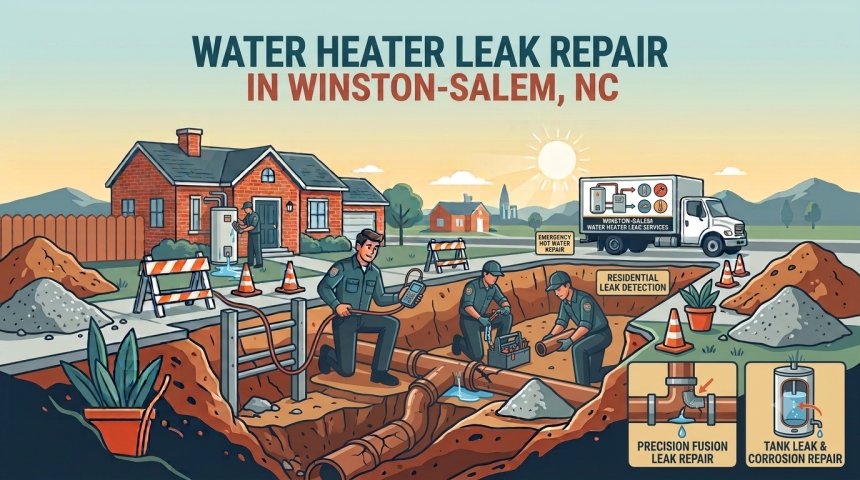
Water Heater Leak Repair in Winston-Salem, NC
A leaking water heater should never be ignored. Even a small amount of water around the unit can indicate a plumbing connection problem, pressure issue, damaged component, or deterioration inside the tank.
Professional water heater leak repair in Winston-Salem, NC can help determine where the water is coming from and whether the problem can be repaired or requires water heater replacement.
Water heater leaks can range from minor connection issues to serious tank failures. Identifying the location of the leak is an important first step in determining the appropriate solution.
Common Causes of Water Heater Leaks
Water heaters contain multiple connections and components where leaks can develop.
Common causes include:
- Loose plumbing connections
- Faulty valves
- Corroded fittings
- Pressure problems
- Temperature and pressure relief valve issues
- Drain valve leaks
- Corrosion
- Tank deterioration
- Damaged heating components
- Improper installation
- Age-related wear
The location of the water can provide useful clues, but a professional inspection may be necessary to determine the actual cause.
Signs of a Leaking Water Heater
A visible puddle is not the only warning sign.
Other symptoms may include:
- Moisture around the water heater
- Rust or corrosion
- Water dripping from a connection
- Damp flooring
- Reduced hot water
- Unusual sounds
- Water collecting near the base
- Repeated pressure-related problems
- Visible deterioration
Even a slow leak can eventually damage flooring, walls, or nearby materials.
Water Leaking From the Top of the Heater
If water is coming from the top of a traditional tank water heater, the problem may involve one of the water connections or valves.
Possible causes include:
- Loose inlet connection
- Loose outlet connection
- Corroded fitting
- Faulty valve
- Connection deterioration
A professional plumber can inspect the connections and determine whether tightening, replacing a fitting, or repairing another component is appropriate.
Water Leaking From the Bottom
Water around the bottom of the water heater can have several possible causes.
The drain valve may be leaking, or water may be coming from another component and collecting beneath the unit.
If the tank itself has developed an internal leak, the situation may be more serious.
A leaking tank generally cannot be repaired in the same way as an external fitting. Replacement may be necessary when the tank has failed.
Leaking Temperature and Pressure Relief Valve
Water heaters have safety components designed to help manage excessive temperature or pressure.
If the temperature and pressure relief valve is leaking or releasing water, the cause should be investigated rather than simply ignoring the discharge.
Pressure or temperature problems can require professional attention.
Leaking Drain Valve
The drain valve allows water to be removed from a traditional water heater tank during maintenance or other service.
If the valve does not close properly or becomes damaged, it may leak.
A plumber can determine whether the valve can be repaired or needs replacement.
Tank Corrosion and Water Heater Leaks
Traditional water heater tanks can deteriorate over time.
Once corrosion significantly damages the tank, water may eventually begin leaking through the tank itself.
A tank leak is generally a sign that replacement should be considered rather than simply repairing the surrounding plumbing.
Why Water Heater Leaks Should Be Addressed Quickly
Water can cause damage when it remains around flooring, walls, cabinets, or other building materials.
A leak can also become larger without warning.
Prompt attention can help homeowners:
- Limit water damage
- Identify the source sooner
- Prevent worsening leaks
- Protect nearby property
- Determine whether repair or replacement is needed
The longer water remains uncontrolled, the greater the possibility of secondary damage.
What to Do When Your Water Heater Is Leaking
If you notice a significant leak, take reasonable safety precautions.
Depending on the system and your ability to do so safely, you may need to shut off the water supply to the heater.
For an electric water heater, the electrical supply may also need to be shut off when safe to do so.
For gas equipment, do not attempt unsafe adjustments or repairs. If you smell gas, leave the area and follow appropriate gas-safety procedures.
Contact a qualified plumber for further evaluation.
Professional Water Heater Leak Repair Process
A plumber may begin by inspecting the entire water heater and surrounding plumbing.
The process can include:
- Identifying the location of the leak
- Checking visible water connections
- Inspecting valves
- Checking the drain connection
- Looking for corrosion
- Evaluating the tank condition
- Checking pressure-related concerns
- Determining whether the problem is repairable
- Testing the system after repair
The exact repair depends on the source and severity of the leak.
Repair or Water Heater Replacement?
A leaking connection does not necessarily mean the entire water heater needs replacement.
Repair may be appropriate when the problem involves:
- A fitting
- A valve
- A connection
- A drain component
- Another replaceable part
Replacement may be more appropriate when:
- The tank itself is leaking
- The unit is severely corroded
- The water heater is near the end of its useful life
- Major repairs are repeatedly required
A professional plumber can evaluate the condition of the unit and explain the available options.
How Much Does Water Heater Leak Repair Cost?
Repair costs vary based on the source and severity of the leak.
Factors can include:
- Type of water heater
- Location of the leak
- Replacement parts
- Labor
- Accessibility
- Extent of corrosion
- Emergency service requirements
- Whether replacement is necessary
A minor valve or connection repair is generally different from replacing an entire water heater.
Preventing Water Heater Leaks
Regular attention can help identify potential problems before they become severe.
Homeowners can:
- Inspect visible connections periodically
- Look for rust or moisture
- Address unusual noises
- Follow manufacturer maintenance recommendations
- Have older systems professionally inspected
- Monitor pressure-related symptoms
- Respond quickly to small leaks
Routine maintenance does not guarantee that a water heater will never leak, but it can help identify developing problems.
Water Damage Around a Water Heater
If a leak has already affected flooring or surrounding materials, the plumbing problem may not be the only issue that requires attention.
Homeowners should consider whether water has reached:
- Flooring
- Walls
- Cabinets
- Stored belongings
- Electrical components
- Nearby structural materials
The water source should be controlled first, followed by appropriate cleanup and property-damage assessment.
When to Call a Plumber
Professional water heater service is recommended when:
- The tank is leaking
- Water is pooling around the heater
- A valve continues to leak
- Connections are corroded
- The leak keeps returning
- The heater is producing unusual noises
- Hot water performance has changed
- The water heater is old
- You cannot identify the source of the leak
Prompt service can help determine whether the issue is a simple repair or a larger water heater failure.
Frequently Asked Questions
Can a leaking water heater be repaired?
Some leaks can be repaired when they originate from a valve, fitting, connection, or replaceable component. A leaking tank may require replacement.
Why is my water heater leaking from the bottom?
Possible causes include a leaking drain valve, water from another component collecting underneath, or deterioration of the tank itself.
Is a leaking water heater dangerous?
A water heater leak can cause property damage and may indicate a more serious equipment problem. Gas and electrical water heaters also require appropriate safety precautions.
How do I know if my water heater tank is leaking?
If water appears to originate from the tank itself rather than a connection or valve, the tank may have deteriorated. Professional inspection can confirm the source.
Should I repair or replace my leaking water heater?
The decision depends on the age and condition of the unit, the source of the leak, repair cost, and whether the tank itself has failed.
Final Thoughts
A leaking water heater should be investigated as soon as possible. Small leaks can worsen and may cause damage to flooring and surrounding areas.
Professional water heater leak repair in Winston-Salem, NC can help identify the source of the leak and determine whether a repair or replacement is appropriate. Regular inspections and timely maintenance can also help homeowners detect developing problems before they become major plumbing emergencies.
Share
What's Your Reaction?
 Like
0
 Dislike
0
 Love
0
 Funny
0
 Angry
0
 Sad
0
 Wow
0