Sewer Pipe Replacement in Winston-Salem, NC
Learn about sewer pipe replacement in Winston-Salem, NC, including warning signs, causes of sewer pipe failure, inspection, replacement methods, trenchless options, costs, and maintenance.

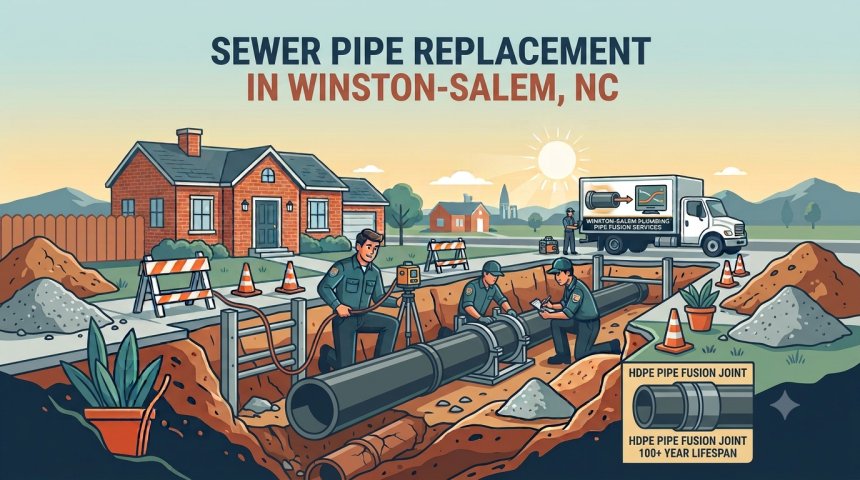
Sewer Pipe Replacement in Winston-Salem, NC
A sewer line is designed to carry wastewater away from a property, but underground pipes can eventually develop cracks, root intrusion, separated joints, severe deterioration, or other structural problems.
When a sewer pipe is no longer reliable, professional sewer pipe replacement in Winston-Salem, NC may be necessary.
Replacement is a significant plumbing project, so a proper inspection should be performed before deciding that the entire line needs to be replaced. In some situations, localized repair or cleaning may be enough. In other cases, replacement can provide a more suitable long-term solution.
What Is a Sewer Pipe Replacement?
Sewer pipe replacement involves removing or bypassing a damaged section of an underground sewer line and installing a new pipe.
The replacement may involve traditional excavation or, when suitable, a trenchless method.
The correct approach depends on the condition of the existing sewer system and the property's layout.
Signs You May Need Sewer Pipe Replacement
Several symptoms may indicate serious sewer pipe problems.
These include:
- Frequent sewer backups
- Recurring drain clogs
- Persistent sewage odors
- Multiple slow drains
- Tree root intrusion
- Cracked sewer pipes
- Collapsed pipe sections
- Repeated repairs
- Sewage pooling in the yard
- Unexplained wet areas near the sewer line
One isolated clog does not automatically mean the sewer pipe needs replacement. Recurring or structural problems require closer evaluation.
Common Causes of Sewer Pipe Failure
Aging Pipes
Sewer pipes can deteriorate with age. Older materials may become brittle, corroded, cracked, or otherwise weakened.
Tree Root Intrusion
Roots can enter through openings in underground pipes and contribute to repeated blockages.
Ground Movement
Changes in soil conditions can place stress on underground plumbing.
Pipe Corrosion
Certain pipe materials may deteriorate due to long-term exposure to moisture and surrounding conditions.
Poor Connections
Separated or damaged joints can allow leaks, debris entry, and root intrusion.
Physical Damage
Construction, excavation, landscaping, or other activities can damage underground sewer lines.
Sewer Camera Inspection Before Replacement
Before replacing a sewer line, a camera inspection can provide valuable information about the existing pipe.
The inspection may reveal:
- Cracks
- Root intrusion
- Blockages
- Pipe separation
- Structural deterioration
- Collapsed sections
- Other visible conditions
This information can help determine whether repair or replacement is necessary.
Sewer Repair vs. Sewer Replacement
Replacement is not always the first option.
A localized repair may be appropriate when the damage is limited and the surrounding pipe is in good condition.
Replacement may be more practical when:
- Damage is widespread
- Multiple sections are failing
- The pipe is severely deteriorated
- Root intrusion repeatedly returns
- Previous repairs have failed
- The pipe has collapsed
- The remaining pipe is unreliable
A professional evaluation can help compare the available solutions.
Traditional Sewer Pipe Replacement
Traditional replacement generally involves excavating the soil above the damaged sewer line.
The damaged pipe is exposed, removed, and replaced with suitable new piping.
After the plumbing work is completed, the excavation area is filled and the surface may need restoration.
The amount of excavation depends on pipe depth, length, location, and surrounding property conditions.
Trenchless Sewer Pipe Replacement
Trenchless methods can provide an alternative to extensive open excavation in suitable situations.
Depending on the project, techniques such as pipe bursting may allow a new pipe to be installed along the existing route with less surface disruption.
Not every sewer line is suitable for trenchless replacement.
Sewer Pipe Replacement Under Driveways
Sewer lines may run underneath driveways, patios, sidewalks, or landscaped areas.
Traditional excavation in these areas can create additional surface restoration requirements.
A trenchless option may sometimes reduce disruption if the sewer line and property conditions are suitable.
Sewer Pipe Replacement in Older Homes
Older properties may have aging sewer infrastructure.
If recurring clogs, root intrusion, or backups continue despite repeated cleaning and repair, evaluating the condition of the entire sewer line may be worthwhile.
Replacement decisions should be based on actual pipe condition rather than age alone.
Sewer Pipe Replacement Process
Inspection
The sewer line is inspected to determine the location and severity of the problem.
Repair Evaluation
The plumber considers whether cleaning, localized repair, or replacement is appropriate.
Replacement Planning
The pipe route, access points, materials, and replacement method are determined.
Removal or Bypassing
The damaged pipe is removed or addressed using the selected replacement method.
New Pipe Installation
A new sewer pipe is installed along the appropriate route.
Connection
The new line is connected to the property's plumbing system.
Testing
The sewer line is tested to verify proper wastewater flow.
Surface Restoration
Any excavation areas may be restored as appropriate to the project.
Choosing Sewer Pipe Materials
The appropriate replacement pipe material depends on factors such as local requirements, installation method, soil conditions, pipe size, and project design.
A qualified plumbing professional can recommend suitable materials for the specific application.
How Much Does Sewer Pipe Replacement Cost?
Sewer replacement costs vary significantly from one property to another.
Important factors include:
- Length of the sewer line
- Pipe depth
- Pipe size
- Existing pipe condition
- Access
- Replacement method
- Labor
- Equipment
- Excavation
- Surface restoration
- Property layout
Because of these variables, an inspection and project assessment are generally needed before determining an accurate cost.
How Long Does Sewer Pipe Replacement Take?
The timeline depends on the length of the affected line, accessibility, replacement method, soil conditions, and complexity of the project.
A small, accessible repair can be very different from a complete underground sewer replacement.
The plumbing professional should explain the expected project sequence before work begins.
Preventing Future Sewer Problems
After sewer pipe replacement, proper plumbing habits can help protect the new line.
Homeowners should:
- Avoid flushing unsuitable items
- Keep grease and cooking oil out of drains
- Monitor recurring slow drainage
- Address root-related problems
- Avoid putting large amounts of debris into drains
- Schedule professional inspection if unusual symptoms develop
Proper use and maintenance can help reduce unnecessary stress on the sewer system.
When Should You Replace a Sewer Line?
Replacement may be considered when the sewer pipe has significant structural deterioration or continues failing despite reasonable repair efforts.
Possible indicators include:
- Multiple damaged sections
- Repeated backups
- Severe root intrusion
- Collapsed pipes
- Persistent leaks
- Extensive corrosion
- Frequent repair requirements
The decision should be based on the condition of the sewer line and the property's long-term needs.
Frequently Asked Questions
How do I know if my sewer pipe needs replacement?
Recurring backups, severe root intrusion, collapsed sections, widespread deterioration, and repeated repair failures may indicate that replacement should be considered.
Can a sewer pipe be repaired instead of replaced?
Yes. If the damage is localized and the rest of the pipe is in good condition, repair may be a practical option.
Does sewer pipe replacement require digging?
Traditional replacement generally involves excavation, while suitable trenchless methods can reduce the amount of surface excavation.
How long does a sewer pipe last?
The service life varies according to pipe material, installation quality, soil conditions, usage, and maintenance. Age alone does not determine whether replacement is necessary.
Can tree roots damage a sewer pipe?
Roots can enter through cracks and joints and contribute to recurring blockages. If the entry point is damaged, pipe repair or replacement may be necessary.
Is trenchless sewer replacement available for every property?
No. The existing pipe, access, layout, size, damage, and surrounding conditions all affect whether trenchless replacement is suitable.
Final Thoughts
A failing sewer pipe can cause repeated backups, slow drains, unpleasant odors, and other plumbing problems. When the damage is widespread or the existing line is no longer reliable, replacement may provide a more practical long-term solution.
Professional sewer pipe replacement in Winston-Salem, NC begins with proper inspection and evaluation. Depending on the property and condition of the sewer line, traditional excavation or a trenchless replacement method may be considered.
Share
What's Your Reaction?
 Like
0
 Dislike
0
 Love
0
 Funny
0
 Angry
0
 Sad
0
 Wow
0